info@gensolar.in
 +91 93987 35165


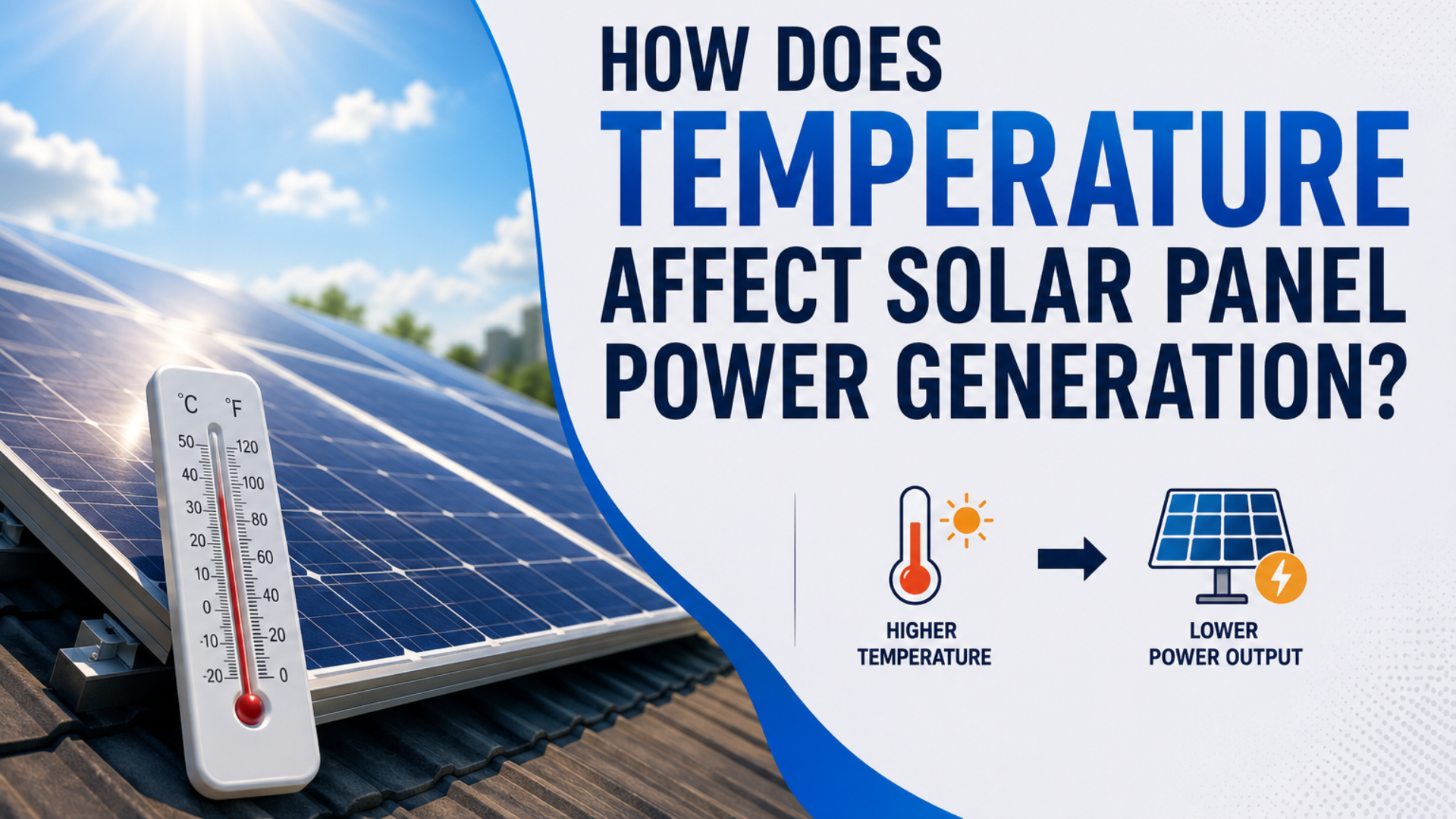
How Does Temperature Affect Solar Panel Power Generation?
Solar panels are devices that make use of the sun to produce electricity. However, temperature influences the efficiency of these panels. Although sunlight is a necessity when it comes to producing solar energy, very high temperatures decrease the electricity production of the photovoltaic cells. The following discussion looks at how temperature affects the efficiency of solar panels.
1. Can Solar Panels Perform Well in Cold Conditions?
The production of solar power does not depend on heat but rather light. This is because the performance of the photovoltaic cells is much better at low temperatures if sufficient sunlight is provided.
It means that a cool but sunny day would result in better performance than a very hot but sunny day.
2. How does High Temperature Influence the Power Generated by the Solar Panels?
An increase in the temperature of the solar panels usually lowers its electrical efficiency. The voltage generated by the cells is lowered by an increase in their temperature.
This implies that the power output generated by a solar panel in a region that experiences extremely high temperatures is likely to be lower than that of panels in other regions.
This influence is determined using the power temperature coefficient of the panel.
3. Why do Solar Panels Heat Up?
Solar panels convert sunlight to electricity, but some of the sunlight is converted into heat energy instead of electrical energy.
Some factors which contribute to heating of solar panels include:
- Continuous and strong sunlight
- Hot environmental temperatures
- Low air circulation near the panels
- Heat absorbing surface beneath the panels
- Bad design of the installation
Thus, the temperature of the solar panels may be significantly higher than the environmental temperature.
4. Does Low Temperature Decrease Solar Energy Production?
Low temperature by itself does not decrease the efficiency of the photovoltaic cell. There have been instances where the photovoltaic cell performs better in low temperatures.
However, in the winter season, there will be low energy production due to shorter daylight, cloudy days, snow cover, or low sun intensity. Hence, the temperature should not be the sole determinant of solar energy production.
5. How Would You Minimize the Effect of High Temperatures?
There are ways by which you would be able to handle losses caused by heat. Some ways are as follows:
- Ensure enough air circulation is provided around the panels.
- Prevent any kind of shading but ensure natural ventilation.
- Install the panels on proper mounting structures.
- Clean the panels so that they continue to absorb sunlight efficiently.
- Choose solar panels with proper temperature coefficients.
6. Temperature Is Not The Only Factor
Temperature plays a major role in the production of solar power, but it is not the only factor. Some other factors that may influence the production include solar irradiation, shading, position of the panel, tilting, dirt, losses, and performance of the inverter.
For this reason, a proper solar assessment should consider both environmental conditions and system design before estimating expected energy generation.
The temperature has a direct impact on the efficiency of solar power production. Although solar panels can perform effectively even in colder temperatures, too much heat tends to lower their efficiency levels. Selecting appropriate panels, adequate ventilation, and proper maintenance of the panels will help to reduce the impact of temperature.
It becomes vital to comprehend the effects of temperature on solar panels especially when solar power plants are designed for areas of very high temperatures.